
What is the function of Welding Antispatters?
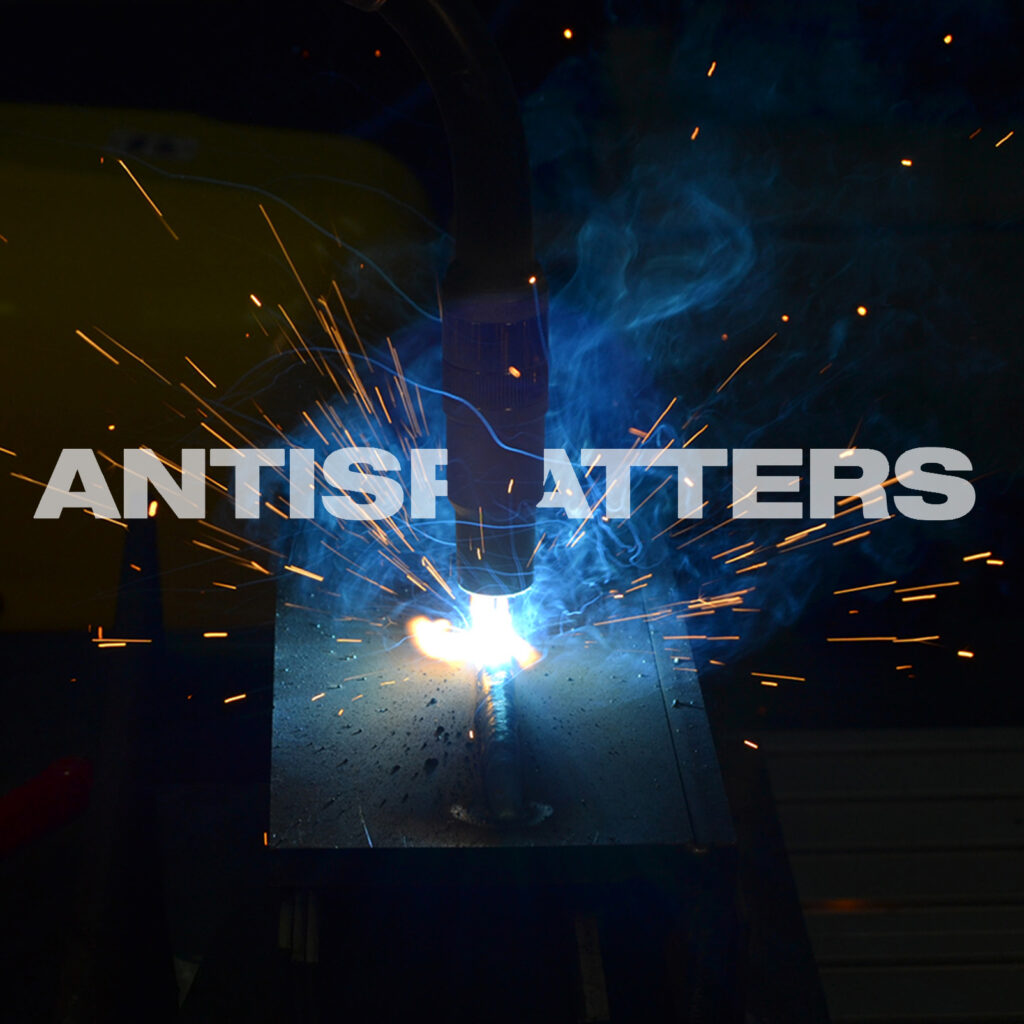
One of the most common problems in welding processes is the formation of spatters, small particles of molten metal that are released during welding. These spatters can cause defects in parts, aesthetic problems and safety risks. To mitigate them, products known as antispatters or antisplatters are used.
What are Antispatter products?
Antispatters are chemical products designed to prevent molten metal spatters from adhering to surfaces or tools during the welding processes. These products are applied in various formats which can be spray, gel or liquid on the surfaces and tools to be protected, forming a protective layer.
There are different types of Antispatters:
- Ceramic Antispatters
A product composed of ceramic that is applied to surfaces susceptible to weld spatters. These ceramic materials form a protective coating that prevents molten metal particles from adhering to treated surfaces. It is typically in aerosol form and is especially useful in welding environments where temperatures are extremely high and conditions are harsh, due to its high quality and effectiveness. Pure ceramic coatings are dry so they adhere to the surface without evaporating and protect for extended periods of time.
- Synthetic Oil-Based Antispatters
Synthetic oil-based antispatters uses 100% synthetic oils as the main component. These oils are chemical formulations created to offer specific properties, such as high thermal resistance and low adhesion.
- Oil-Based Antispatters
Unlike synthetic oil-based antispatters, these use vegetable and mineral oil bases and are formulated to offer specific properties such as thermal resistance and film-forming ability.
- Water Based Antispatters
These spray antispatters use water as the primary solvent, rather than oils or organic solvents. They are formulated to provide effective protection against weld spatter, while being more environmentally friendly.
Function of Antispatters
The main function of antispatters is to form a protective barrier on surfaces susceptible to adhesion of metal particles. Their mechanism of action includes:
- Formation of a Protective Layer: Antispatters create a layer on the surface of parts and tools. This layer prevents the molten metal particles from adhering, allowing their easy removal at a later date.
- Surface Tension Reduction: Some antispatters contain agents that lower the surface tension of the molten metal, reducing the tendency of the molten metal to form droplets that adhere to surfaces.
- Thermal Protection: They act as temporary insulators that protect the surfaces from the high temperatures generated during welding, reducing the melting and adhesion of the spatters.
- Ease of cleaning: After the welding process, surfaces treated with antispatters are much easier to clean. Metal particles are removed without the need for abrasive tools or additional cleaning processes.
Advantages of the use of Antispatters
The use of antispatters offers multiple benefits, among them:
- Improved Product Quality: By avoiding spatter adhesion, cleaner surfaces and more aesthetic finishes are obtained.
- Reduced Cleaning Time: Facilitates the elimination of spatters, saving time and effort in the post-weld process.
- Equipment Protection and Cost Savings: Minimizes wear and damage to welding tools and equipment, extending their lifespan and saving the cost of replacing equipment and tools.
- Safety: Reduces the risks associated with handling parts with adhering spatters, reducing the potential for injury.
Conclusion
Antispatters are an effective solution to one of the most common problems in welding processes. By forming a protective barrier, they reduce the adhesion of metal particles, improve the quality of the final product and facilitate subsequent cleaning. Implementing the use of antispatters can result in a significant increase in welding efficiency and safety, making the welding process more effective and less problematic, as well as greatly reducing tool and component costs and time spent.